
The Global Governance Initiative
China and its bid to reform the multilateral system “from within” With a keen sense of timing, China completed in September 2025 the fourth pillar on which its international strategy rests: the Global Governance Initiative (GGI), a “fundamental guideline for safeguarding the purposes and principles of the UN Charter”. 1 Following the launch, from 2021 onwards, of the Global Development…

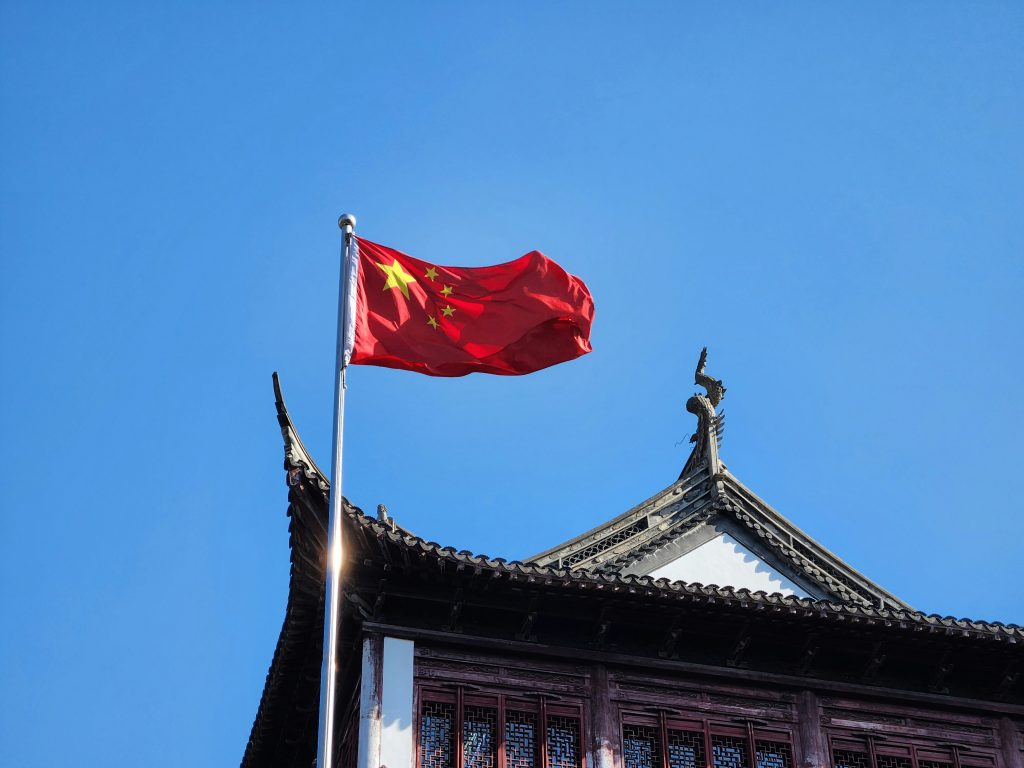
With a keen sense of timing, China completed in September 2025 the fourth pillar on which its international strategy rests: the Global Governance Initiative (GGI), a “fundamental guideline for safeguarding the purposes and principles of the UN Charter”. 1Following the launch, from 2021 onwards, of the Global Development Initiative (GDI), the Global Security Initiative (GSI) and the Global Civilisation Initiative (GCI), the People's Republic has established itself as an active promoter of the reform of the multilateral system.
Within the framework of the 80th anniversary of the creation of the United Nations (an organization where the then Republic of China was among the select group of victorious powers and, therefore, a permanent member of the newly formed Security Council), China is doubling down on its advocacy for improving the post-1945 global governance system, which has been languishing and showing signs of its lack of representativeness and effectiveness.
In an international geopolitical environment marked by clear fractures that encourage reckless adventures everywhere, the GGI is anchored in five core ideas: the principle of sovereign equality, the defence of international law “without any double standards or impositions”, a commitment to multilateralism, a people-centred approach, and the pursuit of effective and tangible results. Regarding that cardinal principle of the Westphalian system, China emphasises its corollary of non-interference in domestic affairs, which Beijing invokes in particular to defend its institutional system, the management of its economy, its relationship with the minorities living within its territory and, above all, the future of Taiwan. A sign of its unwavering respect for that principle is the (generous) welcome it offered Vladimir Putin and Kim Jong Un during Victory Day, leaders heavily criticised in other parts of the world and in international forums for violating precisely the principles that China now claims as the core of its new global initiative.
China explicitly states its intention to reform the United Nations governance system “from within,” rather than contributing to its dismantling. To make this reform effective, particular attention must be paid to the system's representation deficit, in order to accommodate the rise of the so-called Global South. That world of 1945, which had not yet seen the dawn of the decolonization movement—which raised the number of countries from 50 to over 140 in just 30 years—reflected in the novel international organization led by the victors, the power distribution (and war effort) of that time. After 80 years, and following the changes that have occurred, including decolonization, the fall of the socialist bloc, and globalization, the United Nations system needs an update to reflect these modifications.
Positioning itself as a “firm builder of world peace and provider of public goods,” China is reinforcing its commitment to multilateralism with the IGG, adopting a tangible, people-centered development approach. The delayed achievement of the 2030 Agenda goals further demonstrates existing governance gaps, including urgent issues like artificial intelligence and cyberspace, according to China's Concept Paper.
As previously mentioned, China's launch of this new global initiative takes place within the framework of the commemoration of the 80th anniversary of the victory over Japan (and, therefore, of the end of World War II). This new anniversary of Victory Day takes on special relevance and symbolism, with Xi Jinping flanked by the Russian and North Korean leaders, under an imposing display of military might in Beijing.
Unlike the parade a decade ago, the presence of high-ranking representatives from over 20 Global South states, primarily from Asia, Africa, and Latin America, accompanying the Chinese leader shows that China is not alone in this alternative vision for the future of international relations. In a context of a violation of multilateralism, and of the very principles upon which the United Nations system is founded—starting with the most basic one of territorial integrity—China presents itself as the catalyst for the sentiment of many states that perceive the dangerous course the international system is exposed to.
These four Chinese global initiatives are threaded together by the 2013 Belt and Road Initiative, which, with its broad spectrum of disciplines and subjects covered, contributes to giving logic and coherence to the system. Indeed, at the Shanghai Cooperation Organization meeting held in Tianjin on September 1st, Xi once again advocated for achieving an effectively inclusive globalization through cooperation within the framework of the Belt and Road, which already includes more than 140 countries worldwide.
Amid so much uncertainty, so many threats and challenges to the current international order (open armed conflicts, climate change, migration, etc.), the notion of a “community with a shared future”, which China has been advocating for more than ten years, since it began to become aware of its stature, its international presence, its capabilities and its responsibilities, is gaining strength. China is not the China of 1945; thirty years had to pass before the country began its process of opening up to the world, which accelerated at the start of this century until it positioned a Chinese nation that, with a renewed stance, stands firm in the East after decades of evolution (Xi Jinping, 2017).2
With this positioning, from the various Fora that China integrates and leads, such as the SCO, BRICS, and G77+China, Beijing consolidates its discourse in favor of multilateralism under the banner of more democratic international relations, within the framework of an updated United Nations. The challenge will be to maintain the congruence of this discourse — very well received by a good part of the international community — with Beijing's concrete actions and responses to the conflicts and complexities of various kinds that the planet faces, so that the alternative perspective is credible and can garner the support of the rest of an international society that needs leadership on par with the challenges we face.
quotes
Xi Jinping pointed out at the 19th CPC National Congress in 2017, “the Chinese nation, with an entirely new posture, now stands tall and firm in the East. With decades of hard work, socialism with Chinese characteristics has crossed the threshold into a new era”.